How to Light Paintings at Home

Good lighting is the difference between a dull wall and a living artwork. This guide keeps things practical for Pakistani homes (Lahore/Karachi/Islamabad)—no jargon overload, just what works and why.

Why lighting quality matters (color you can trust)

Most “yeh color website se different lag raha hai” moments are lighting, not the artwork. Focus on:

  • CRI ≥ 90 so reds/skin tones look natural and pigments stay true.
  • CCT (Kelvin): 2700–3000K for warm living spaces; ~3500K for bright, modern rooms.
  • Evenness: avoid hot spots or fall-off; you want a soft, continuous wash over the piece.

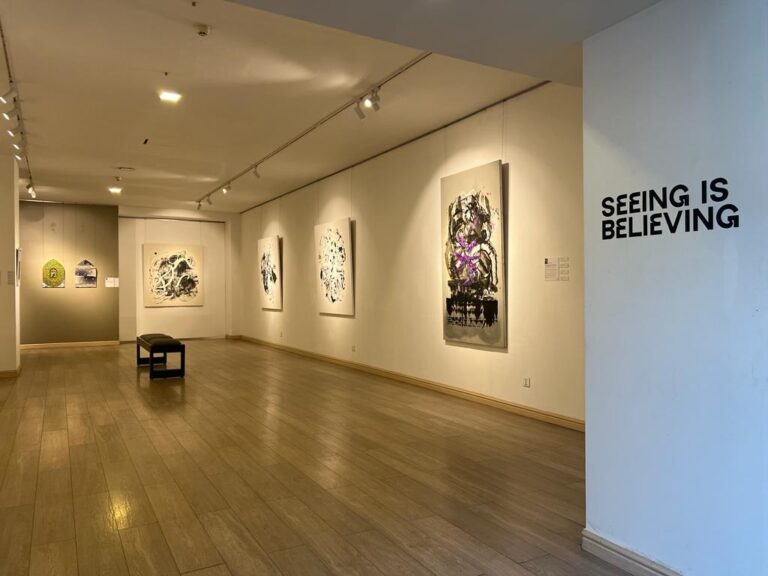
Inspiration: To compare warm vs neutral side-by-side under controlled lighting, browse current hangs and see how beam angle changes the mood in Exhibitions in Lahore.

Pick the right fixtures (and avoid heat/UV)

Works well at home

  • Track lighting lets you aim multiple heads across a wall.
  • Adjustable spots/floods: narrow for feature works, wider for large canvases.
  • Picture lights: neat solution if they’re high-CRI LEDs with low heat.

Avoid

  • Halogen close to art (heat + UV).
  • Bare downlights mounted too near the surface—common glare culprit.

Try-before-you-buy: Bring photos (or the piece) and test beam spreads in a quick session via Plan your visit.

The 30° rule (goodbye glare, hello texture)

Aim your light at about 30 degrees from the wall:

  • Slashes mirror-like reflections on glass/glossy varnish.
  • Gives a gentle raking light that reveals brushwork without harsh shadow edges.
    Still seeing glare? Shift a few degrees and check from typical viewing spots.

Sunlight, UV & heat (preserve the work)

  • Keep art out of direct sun—UV and heat slowly degrade pigments and varnish.
  • Maintain 15–30 cm distance between luminaire and surface.
  • In bright rooms, anti-reflective/UV glass on glazed works and UV-stable varnish on canvas help.

Conservation cue: For long-term care routines and material choices, see Framing & Conservation.

Quick lighting recipes by room

Living room / lounge

  • Two or three adjustable spots at 30°, CRI≥90, 2700–3000K.
  • Add a soft fill light so the wall isn’t patchy.

Dining area

  • Warm, even wash; avoid pendant reflections on glazed works.
  • Add a narrow beam if one piece needs emphasis.

Bright Lahore apartments

  • Use AR glass for framed works; keep CCT ~3000–3500K.
  • Sheers or UV film help if daylight hits that wall.

Home office / cafés / offices

  • Neutral 3000–3500K for accurate color; pick low-glare finishes on the frame/glass.

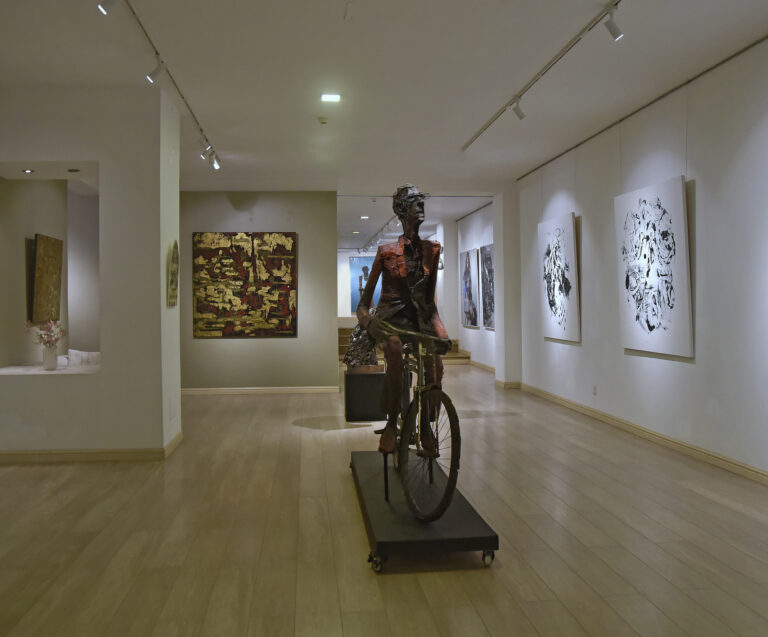
See it live: Large abstracts, intimate miniatures, and calligraphy with gold leaf are lit differently—browse real displays in Exhibitions and open piece details in Artworks.

Medium-specific tweaks

  • Canvas (oils/acrylics): moderate raking to reveal impasto; avoid specular “hot dots.”
  • Paper/watercolor/prints under glass: angle is everything—combine the 30° rule with anti-reflective glass.
  • Gold leaf / metallic calligraphy: dim a notch and feather the angle to keep highlights controlled.

Genre cue: If you collect calligraphy, compare scripts and finishes in Artworks before deciding on lighting and glass.

Hanging height & spacing (balanced, easy on the eyes)

  • Typical centerline ~145–150 cm from floor (eye level).
  • 5–8 cm between frames in gallery walls; big works need more air.
  • For diptychs/triptychs, level each panel’s brightness to avoid uneven seams.

Maintenance (set it once, then just checks)

  • Dust frames/fixtures monthly.
  • Replace LEDs at first sign of flicker or color shift.
  • Do an annual condition check for warping, sagging, mold, or fading.

Aftercare cue: If a piece needs re-stretching or new glazing, the same checklist we use for shows is available through Framing & Conservation.

FAQs (people also ask)

What Kelvin is best for paintings at home?
2700–3000K for warm living areas; ~3500K works in bright, modern rooms—always with CRI≥90.

How do I light a painting without glare?
Use the 30° rule, keep fixtures a safe distance, and consider anti-reflective glass on glazed works.

Are LEDs safe for oil paintings?
Yes—choose high-CRI LEDs with low IR/UV and avoid excessive heat buildup.

How bright should the light be?
Aim for the artwork to be ~1.5–3× the surrounding wall brightness—enough to lead the eye without washing texture.

Picture light or spotlight—what’s better?
Spot/track gives more control; picture lights are tidy if correctly sized and high-CRI.
Share the Post:

Related Posts

May 23, 2022

‘Memories Of Japan’: Shahid Jalal’s Magnificent Last Lap

A glimpse of Japan’s manicured beauty captured by Shahid Jalal in his paintings currently on

April 10, 2022

A survey of cryptographically signed artefacts

NFT +92 was a timely exhibition of a few minted works for only two days,

February 5, 2022

Unleashing Creativity: Maliha Azami Aga’s “High Voltage” Solo Show

Art has the power to transcend boundaries, to take us on journeys beyond the realms