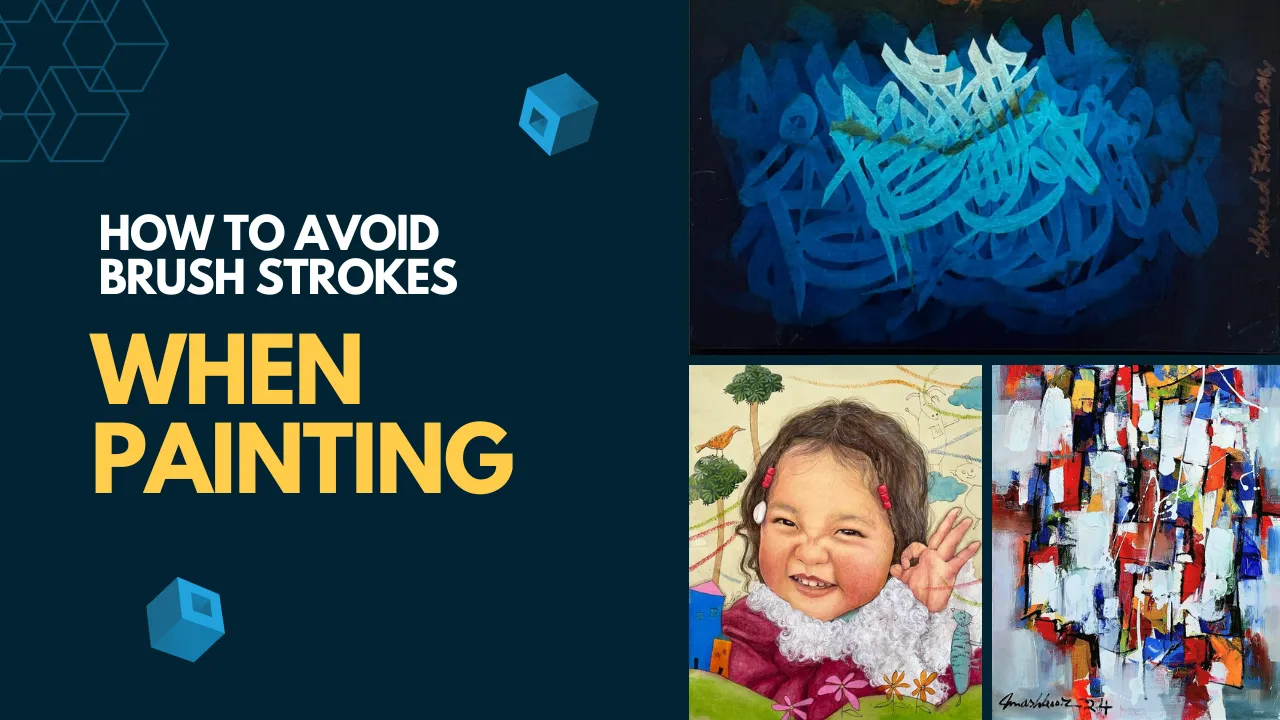
If you’ve ever finished a painting only to notice unwanted brush marks ruining the smooth finish, you’re not alone. Brush strokes are one of the most common frustrations for artists, whether you’re working with acrylics, oil paints, or watercolors. But don’t worry — learning how to avoid brush strokes when painting is easier than you think.
In this detailed guide, we’ll explore artist-approved techniques, expert tools, and painting secrets that help you achieve a clean, flawless surface every time.
Before you can fix the problem, you need to understand the cause. Brush strokes usually appear because of:
Each of these can create visible streaks or uneven textures — especially if you’re aiming for a smooth, professional finish.
Your choice of brush plays a huge role. Always use soft, high-quality brushes made of synthetic or sable bristles for smooth finishes.
Flat brushes are great for wide areas, while filbert brushes give a rounded, blended edge.
Pro Tip: Avoid old or frayed brushes — they’ll only exaggerate unwanted lines.
If your paint is too thick, it’ll show brush marks. You can:
A common pro technique is to keep a wet edge — meaning don’t let the paint dry mid-stroke. Work quickly in sections so each brush stroke blends seamlessly with the next.
Instead of short, choppy movements, glide your brush smoothly across the surface.
Start each stroke outside the canvas edge, and lift off gently — this avoids hard start and stop marks.
For a truly glassy finish, lightly sand your painting after each dry layer using fine-grit sandpaper (400–600 grit). Then wipe the dust off and apply the next coat. This technique is common among professional portrait and still-life artists.
Each paint type has mediums that help reduce brush marks:
These not only smoothen paint but also improve drying consistency and blending.
If paint dries too fast (especially acrylics), it traps strokes. Work in a cool, humid space, or use slow-drying mediums to extend blending time.
Dirty or semi-dry brushes leave ridges in paint. Always rinse thoroughly between colors and reshape your bristles after washing.
Pro Tip: Store brushes horizontally or upside-down to keep bristles in shape.
For large background areas or modern abstracts, use a foam roller or palette knife instead of a brush. These tools apply paint evenly and eliminate streaks completely — perfect for contemporary artwork lovers.
Q1: What’s the best way to get a smooth finish with acrylic paint?
Use soft brushes, thin your paint slightly, and apply in long strokes while keeping a wet edge.
Q2: Should I sand my painting between layers?
Yes — for professional results, sanding between layers can help eliminate tiny ridges.
Q3: Can I use varnish to hide brush strokes?
Absolutely. A gloss varnish or satin finish can visually smooth out minor imperfections.
At Ejaz Art Gallery, we believe painting isn’t just about technique — it’s about patience, texture, and expression. Many of our featured Pakistani artists, from Quddus Mirza to Maliha Azami Aga, skillfully blend modern mediums and traditional brushwork to create timeless pieces.
If you want to explore how professionals achieve perfection in every stroke, visit our Art Exhibitions Section and discover inspiring works from Pakistan’s top contemporary artists.
Avoiding brush strokes is all about control, patience, and precision. By choosing the right tools, maintaining consistent technique, and understanding your paint, you can create smooth, professional artworks that truly stand out.
Whether you’re experimenting with acrylics or mastering oil painting, remember: every great artist once struggled with brush marks — what matters is how you learn from each stroke.

In the past decade, the art world has witnessed a profound shift towards digital mediums,

Art has the power to evoke emotions, inspire creativity, and transcend cultural boundaries. One of

In the ever-evolving realm of art, the clash between traditional and digital mediums has sparked